
What You Need to Know About Winter Construction: Challenges, Safety, and Smart Planning
Winter Construction: Why It’s Possible and Why Planning Matters
Winter construction is often seen as inefficient or high risk, yet across Canada, construction continues year-round. In Western Canada, where long winters are common, delaying all construction until spring is rarely realistic. The success of winter construction depends not on avoiding cold weather, but on planning effectively for it.
Cold temperatures, snow, ice, and reduced daylight affect schedules, materials, labor productivity, and safety. Without preparation, these factors can lead to delays, quality issues, and cost overruns. With the right planning, tools, and skilled trade teams like Framing, Electrical, Siding, and Foundation, winter construction can remain productive and controlled.
Gobind Trades supports contractors and builders across Western Canada by supplying experienced, safety-certified trade professionals who understand cold-weather construction requirements and help projects move forward efficiently.
Key Challenges of Winter Construction
One of the primary challenges of winter construction is weather-related scheduling disruption. Projects typically include weather contingency days, but early snowfall, rain, or high winds can quickly exhaust these allowances. High winds may stop crane operations, delaying structural steel, precast, or panel installation.
Cold temperatures also impact materials. Concrete pouring and curing require strict temperature control, as freezing conditions can prevent proper strength development. Adhesives, paints, and sealants used in Exterior and Interior construction may require extended curing times or heated environments to perform correctly.
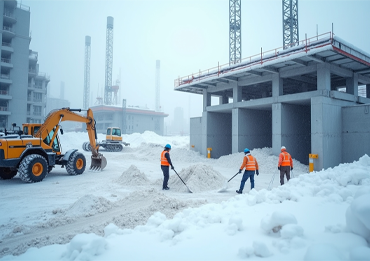
Snow and ice accumulation create additional difficulties. Frost penetration into soil can delay foundation work, while snow removal increases labor demands and site costs. Shorter daylight hours further reduce productive work time, making efficient scheduling essential.
Smart Planning Strategies for Winter Construction
Successful winter construction begins with early, detailed planning. Project teams often sequence work to limit winter-sensitive activities and prioritize tasks that can be safely completed in cold conditions. Completing foundational or structural work during winter allows projects to progress more quickly when warmer weather arrives.
Contingency planning is critical. Schedules must account for potential weather delays, worker availability, and equipment downtime. Cold-weather concrete and masonry plans outline curing methods, heating requirements, and testing procedures to protect quality and compliance.
Gobind Trades supports winter planning by providing skilled trade teams familiar with winter sequencing, safety standards, and productivity expectations.
Managing Snow, Frost, and Ground Conditions
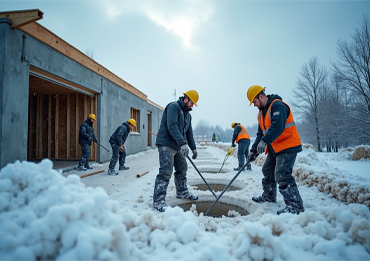
Effective snow and frost management is essential to maintain safe, functional job sites. Common techniques include tenting and heating targeted areas, using insulated blankets, and deploying ground heaters to prevent soil freezing beneath slabs and foundations.
In extreme conditions, frost penetration can increase costs and delay schedules. Cement stabilization may be used to strengthen soil, reduce moisture infiltration, and create a durable surface capable of supporting equipment during winter operations.
Melting snow and ice can also lead to water accumulation around footings and slabs. Active moisture management helps prevent delays and material damage while keeping sites safe and accessible.
Temporary Heating and Specialized Winter Tools
Temporary heating solutions are a cornerstone of winter construction. Enclosed tenting with forced-air heaters helps maintain workable temperatures in localized areas, while radiant heating systems target materials directly. Portable ground heaters prevent freezing prior to concrete pours.
Cold-weather concrete requires additional protection. Heated enclosures, insulated blankets, and chemical accelerators support proper curing and long-term durability. Moisture control measures protect materials and equipment from damage caused by freezing and thawing cycles.
Selecting site-specific, energy-efficient heating solutions helps balance safety, quality, and cost control.
Maintaining Quality Standards in Cold Weather
Maintaining quality during winter construction requires close oversight. Cold temperatures increase the risk of improper curing and material failure if winter-specific procedures are not followed.
Quality control measures include temperature monitoring, strength testing, and the use of approved winter materials and additives. Heated curing environments help ensure consistency and structural integrity.
With proper controls in place, winter construction can meet the same quality standards as projects built during warmer seasons.
Safety Risks and Winter Construction Protection Measures
Safety is a top concern during winter construction. Ice, snow, and wet surfaces significantly increase slip-and-fall risks, particularly on elevated work areas such as scaffolding and decking.
Cold exposure introduces additional hazards, including frostbite and hypothermia. Workers must wear appropriate winter PPE such as insulated clothing, gloves, and slip-resistant footwear. Heated break areas and scheduled warm-up breaks help reduce cold-related injuries.
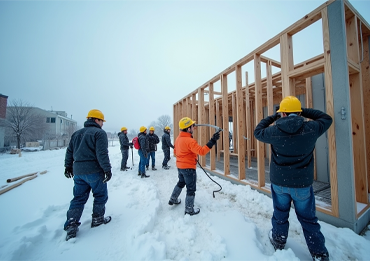
Daily safety briefings, weather monitoring, and clear emergency procedures ensure crews remain aware of changing conditions. Gobind Trades prioritizes safety by supplying trained professionals who follow strict winter protection protocols on every site.
Cost Considerations in Winter Construction
Winter construction can increase costs due to snow removal, heating requirements, additional manpower, and potential delays. Structural steel work may require snow clearing, while exterior services such as Siding often demand special allowances.
However, smart planning can offset these expenses. Completing foundational work in winter allows faster progression in spring, reducing overall project timelines. Efficient construction methods, such as Pre Fab Solutions, can further limit labor demands and weather exposure.
Frequently Asked Questions (FAQ)
Is winter construction safe?
Can concrete be poured in winter?
What are the biggest winter construction challenges?
How can winter construction stay on schedule?
Conclusion
Winter construction requires a different approach, but with proactive planning, specialized tools, and strong safety practices, projects can remain efficient and high-quality even in harsh conditions.
Build Confidently This Winter with Gobind Trades Team
Gobind Trades supplies skilled, safety-certified trade professionals who excel in winter construction environments across Western Canada.
Partner with Gobind Trades to keep your winter project moving safely, efficiently, and on schedule.
📞 Contact Us | 📩 Book a Trade | 🌐 www.gobindtrades.com
Need a Hand? Book a Trade.