
Winter Construction Safety: Cold Weather Jobsite Practices
Construction Safety Spotlight: Winter Edition
Winter construction brings a distinct set of safety challenges that require more than basic cold-weather awareness. In Western Canada, fluctuating temperatures, snow accumulation, freeze–thaw cycles, and reduced daylight significantly increase risks for construction workers across Framing, Concrete, Structural Steel, Electrical, Precast, Tilt-Up, Siding, and Foundation Work.
While summer safety often focuses on heat stress, winter hazards such as cold exposure, slippery surfaces, material performance issues, and equipment strain can be just as dangerous, if not more so. Without proper planning, winter-ready PPE, and experienced trade coordination, these conditions can lead to injuries, delays, and compromised quality.
This Construction Safety Spotlight: Winter Edition breaks down the most critical winter construction safety risks and outlines proven strategies that help projects remain safe, productive, and compliant throughout the colder months.
Understanding Cold Exposure and Cold Stress on Construction Sites
Cold exposure, also known as cold stress, occurs when the body loses heat faster than it can produce it. Exposure to cold temperatures, wind, moisture, and snow places significant strain on the body, especially during extended outdoor work.
What qualifies as extreme cold varies by region and individual tolerance. Workers accustomed to milder climates may be more vulnerable when working in Western Canada’s winter conditions. Wind chill further intensifies cold exposure, making moderate temperatures feel far colder and increasing the risk of injury even when temperatures appear manageable.
Cold stress is not a single condition, it includes a range of health risks that can escalate quickly without proper prevention, monitoring, and response.
Major Winter Construction Hazards to Watch For
- Slips, Trips, and Falls: Snow and ice create some of the most common winter jobsite hazards. Walkways, scaffolding, ladders, and elevated work areas become increasingly dangerous during freeze–thaw cycles, particularly when melting snow refreezes overnight.
- Reduced Daylight and Visibility: Shorter daylight hours limit available work time and reduce visibility. Low-light conditions increase the risk of struck-by incidents, equipment collisions, and falls, making high-visibility clothing essential.
- Driving and Equipment Operation: Winter driving conditions pose risks for workers traveling to and from sites and operating heavy equipment. Icy surfaces, snow-covered work zones, and limited traction increase the likelihood of accidents involving vehicles and machinery.
- Freeze–Thaw Effects on Materials and Surfaces: Temperature fluctuations cause surfaces to become unpredictably slick and can negatively impact materials such as concrete, sealants, and adhesives if winter installation requirements are not followed.
Health Risks Caused by Cold Exposure
- Chilblains: Chilblains occur when small blood vessels in the skin become inflamed due to repeated exposure to cold and moisture. Symptoms include redness, swelling, itching, and blistering, typically affecting hands and feet.
- Frostnip: Frostnip is an early warning sign of frostbite. Affected areas, often ears, nose, fingers, or toes, may appear pale or numb but recover fully when rewarmed promptly.
- Trench Foot: Trench foot develops when feet remain wet and cold for prolonged periods. Even temperatures above freezing can cause trench foot when moisture is present, leading to swelling, pain, numbness, and tissue damage.
- Frostbite: Frostbite occurs when skin and underlying tissues freeze. It can cause permanent damage and, in severe cases, amputation. Immediate medical attention is required.
- Hypothermia: Hypothermia is the most serious cold-related risk, occurring when core body temperature drops below 35°C (95°F). Early symptoms include shivering and fatigue, progressing to confusion, loss of coordination, and potentially death if untreated.
Essential Winter PPE for Construction Safety
- Head and Face Protection: Hard hat liners, insulated beanies, and full face coverings help prevent heat loss and protect exposed skin from wind chill.
- Hand Protection:Insulated, waterproof gloves are essential. Layering glove liners allows flexibility for changing conditions while maintaining warmth.
- Torso Protection and Visibility: Layered clothing is critical. Loose-fitting thermal layers improve circulation, while outer shells protect against wind and moisture. High-visibility winter jackets are especially important during low-light conditions.
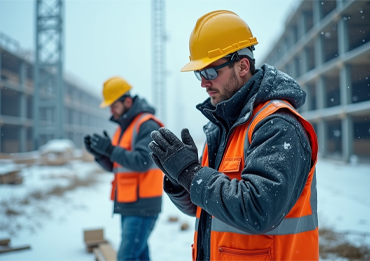
- Footwear and Traction: Waterproof, insulated boots with slip-resistant soles help prevent frostbite and reduce fall risks. Proper socks and moisture control are equally important.
Smart Planning to Reduce Winter Safety Risks
Successful winter construction safety begins with proactive planning. Scheduling tasks during the warmest part of the day, using shorter shifts, and rotating crews helps limit cold exposure.
The buddy system allows workers to monitor each other for early signs of cold stress. Regular breaks in heated areas restore body temperature and reduce fatigue. Monitoring weather forecasts, wind chill advisories, and winter storm warnings allows teams to adjust work plans before conditions become hazardous.
Equipment, Tools, and Site Readiness in Winter
Cold weather increases strain on tools and equipment. Batteries, hydraulics, hoses, and lubricants are more prone to failure in freezing temperatures, making proper winterization essential.
Snow and ice management is critical. Clearing walkways, staging areas, and access points reduces fall risks and improves site efficiency. Temporary heating, insulated enclosures, and heated break areas support both safety and productivity.
Regular inspections of worksites and vehicles ensure hazards such as fallen power lines, icy surfaces, and equipment issues are identified before work begins.
Maintaining Quality and Productivity During Winter Construction
Winter safety and quality go hand in hand. Cold temperatures affect curing, drying, and installation processes for materials like concrete, drywall, and exterior finishes. Following winter-specific installation practices helps prevent rework, structural issues, and compliance failures.
Experienced, winter-ready trade professionals understand how to adapt workflows, protect materials, and maintain quality even in challenging conditions, allowing projects to stay on track without sacrificing safety.
How Gobind Trades Supports Winter Construction Safety
Gobind Trades supplies skilled, safety-certified trade professionals across Western Canada who are experienced in winter construction environments. Our teams understand cold-weather sequencing, PPE requirements, and safety protocols required to perform work efficiently and safely.
We support projects across:
- Framing
- Electrical
- Concrete
- Structural Steel
- Precast
- Tilt-Up
- Siding
- Foundation Work
By providing dependable labour and winter-ready crews, Gobind Trades helps contractors reduce safety risks, minimize delays, and maintain productivity throughout the winter season.
Frequently Asked Questions (FAQ)
Is construction safe during winter?
What is the biggest winter safety risk on construction sites?
How can cold stress be prevented?
Does winter affect construction quality?
Conclusion: Building Safer Winter Jobsites
Winter construction does not have to mean increased risk or reduced productivity. When safety planning accounts for cold exposure, proper PPE, equipment readiness, and skilled labour coordination, construction projects can remain safe and efficient throughout the colder months.
Keep Your Winter Project Safe with Gobind Trades
Gobind Trades provides skilled, safety-certified trade professionals who understand the demands of winter construction across Western Canada.
Partner with Gobind Trades to keep your jobsite safe, productive, and moving forward, no matter the season.
📞 Contact Us | 📩 Book a Trade | 🌐 www.gobindtrades.com
Need a Hand? Book a Trade.